Table Of Content

Among other divine triplicities and triple goddesses like Brigid and The Morrigan. Which brings us to the idea that Baba Yaga was a triple goddess. In “The Maiden Tsar” tale, the story speaks of the “three Babas” as sisters. At the end of the three days, Vasalisa is granted her desire to return home.
Contents
I have truly wondered about this feature and the only theories I’ve come up with are a. The iron nose is a nod to clairsalient (psychic smelling) abilities OR showing the spirit’s unfailing primal instinct. A mortar so big one could sit inside it, with a pestle just as massive – such things can only surprise modern citydwellers. In Russian villages, a mortar and a pestle were just as common as a broom or an oven fork. The process wasn’t very difficult, but required a lot of time, which was why it was often done by old women.
Vasilissa the Beautiful
The moral of her story seems to be that anyone who possesses a loving and honorable heart can overcome even the worst evil. Surely, any story that can teach that to our children should endure. Meanwhile,in Season 2 of ‘The Witcher’, the antagonist Voleth Meir (Deathless Mother) borrows some features from Baba Yaga (her hut stands on the legs of basilisks – a kind of hellish chicken). But there's no way around the fact that there's a hit action franchise where the main character's nickname is "Spooky Grandma." Both for us as we conjure whichever version of Baba Yaga that suits us best, and for the legendary woman and her own powerful potential.
Similarities to the Famous German Fairytale
Baba Yaga Will Answer Your Questions About Life, Love, and Belonging - Literary Hub
Baba Yaga Will Answer Your Questions About Life, Love, and Belonging.
Posted: Wed, 28 Oct 2020 07:00:00 GMT [source]
After Vasilisa completes several tough chores, Baba gives her a fire in a skull lantern and lets Vasilisa return home. That there are multiple Babas Yaga is made more explicit in stories in which there are literally multiple Babas Yaga, such as "The Maiden Tsar." Baba Yaga sends her home with a skull containing the fire she was sent to fetch, and once it is brought into the house, it burns the evil stepmother and stepsisters to ashes. Afterwards, Vasilissa and her doll leave the house, she becomes a seamstress and, with the doll’s help, impresses the king so deeply that he falls in love with her, and they are married, living happily ever after. According to the World History Encyclopedia, Baba Yaga shares several characteristics with an early Slavic goddess of death. Called Iagaia Baba, the underworld goddess sat atop an iron mortar and carried a pestle made from the same material.
Baba Yaga: The greatest 'wicked witch' of all? - BBC.com
Baba Yaga: The greatest 'wicked witch' of all?.
Posted: Sun, 20 Nov 2022 08:00:00 GMT [source]
Baba Yaga’s House: A Bewitching Abode on Chicken Legs
She has emerged as a symbol of female empowerment and independence, inspiring feminist interpretations and discussions. The image of a powerful and unconstrained grandmother who does as she pleases has resonated with many people, reinforcing the importance of challenging societal norms and expectations. Baba Yaga’s house on chicken legs remains a bewitching symbol of mystery and danger, where dark enchantments and transformative journeys await those who dare to enter its threshold. Baba Yaga myths and legends are a captivating part of Eastern European folklore. Known as a terrifying figure, Baba Yaga is described as a deformed and voracious old woman who kidnaps and cooks her victims, especially children. Therefore, Baba Yaga could be a wide range of things in the folklore, ranging from a wise old grandmother to bone breaker, or a helper to an evil witch.
The Complexities Of A “Grandmother Witch”
One of the best-known trickster figures is Loki from Norse mythology who repeatedly antagonizes the gods of Asgard but is responsible for a number of their most prized magical items including Thor’s hammer and Odin’s spear. Among the many possibilities suggested are disease, illness, horror, chill, wicked wood nymph, witch, evil woman, rage, fury, anger, torture, pain and worry, serpent, snake, uncle’s wife, stepmother, aunt, and mother. She usually leaves her hut in the morning, returning in the evening, and commands a flock of black geese that circle the skies looking for children. Olga is able to save her brother through the use of magical items, and the two learn their lesson about not listening to their mother. The House with Chicken Legs follows Marinka, who has grown up with her grandmother, Baba, in a magical, sentient house that roams the world, settling in new, remote places. Every night, Baba cares for the spirits of people who have recently died, offering the spirits food and comfort before guiding them into the afterlife with a blessing.
Visit Our Bookstore
Learn about the significance of her legendary mobile house, perched atop giant chicken legs, and adorned with skulls in its fence. Perhaps the reason why her house sits on two giant chicken legs has to do with the kind of store houses some Slavic communities used back then. To stop animal foraging, houses were placed on top of tree stumps.
A Baba Yaga Story of Initiation into the Magical Arts (aka Vasalisa the Wise)
You may be required to perform acts of service in her name, perhaps by aiding in preservation of the earth, forest, or wildlife. The Slavic witch has the power to help or hurt anyone who crosses her path. Those who seek her wisdom, truth, and knowledge must first complete several tasks.
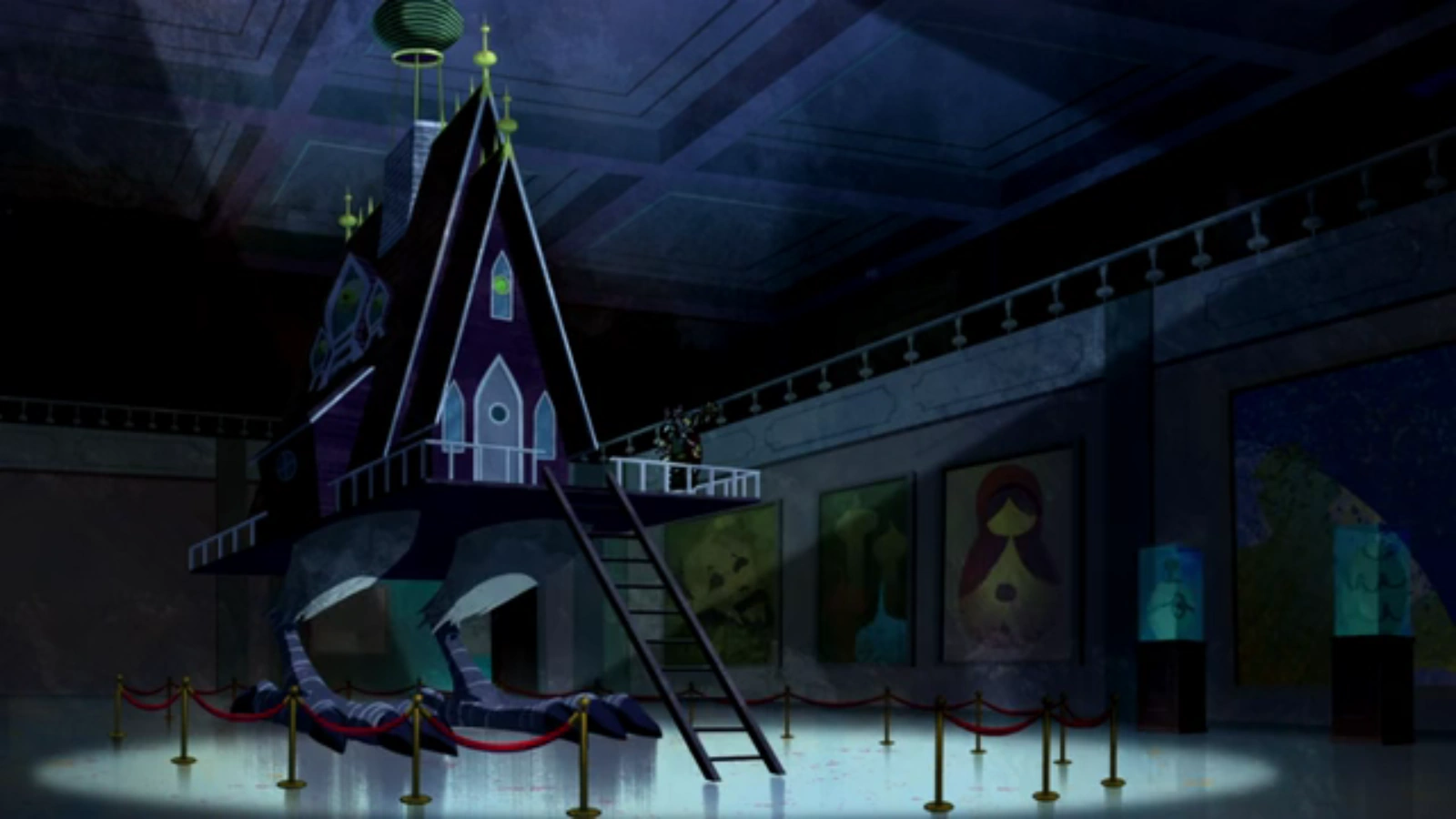
With the threat of being roasted and eaten by the witch, Vasilisa completes the tasks — with the help of a magical doll. She then successfully leaves with the fire, in the form of a burning skull from Baba Yaga’s fence. There’s no question that Baba Yaga is a fearsome figure in Slavic folklore. But she also sometimes acts as a fairy godmother — with a dash of evil. Baba Yaga’s iconic status transcends her role as a malevolent figure.
In one tale of the Russian ethnographer and folklorist Alexander Afanasyev’s 19th century collection of folk tales, the protagonist Ivan is said to visit one of the three Baba Yagas. Baba Yaga, when inside, has the ability to stretch herself from one corner of the hut to the other corner. She’s also been known as the guardian of the fountains of the water of life. In Old Russian, however, the word “baba” was used for sorceresses and midwives and fortune-tellers. Folklorists and scholars have stated that the character Baba Yaga goes all the way as far back as the Medieval era. This explains why it isn’t hard to come by Baba Yaga stories, as there are several thousands of them in Slavic folklore and other neighboring folklore in the region.
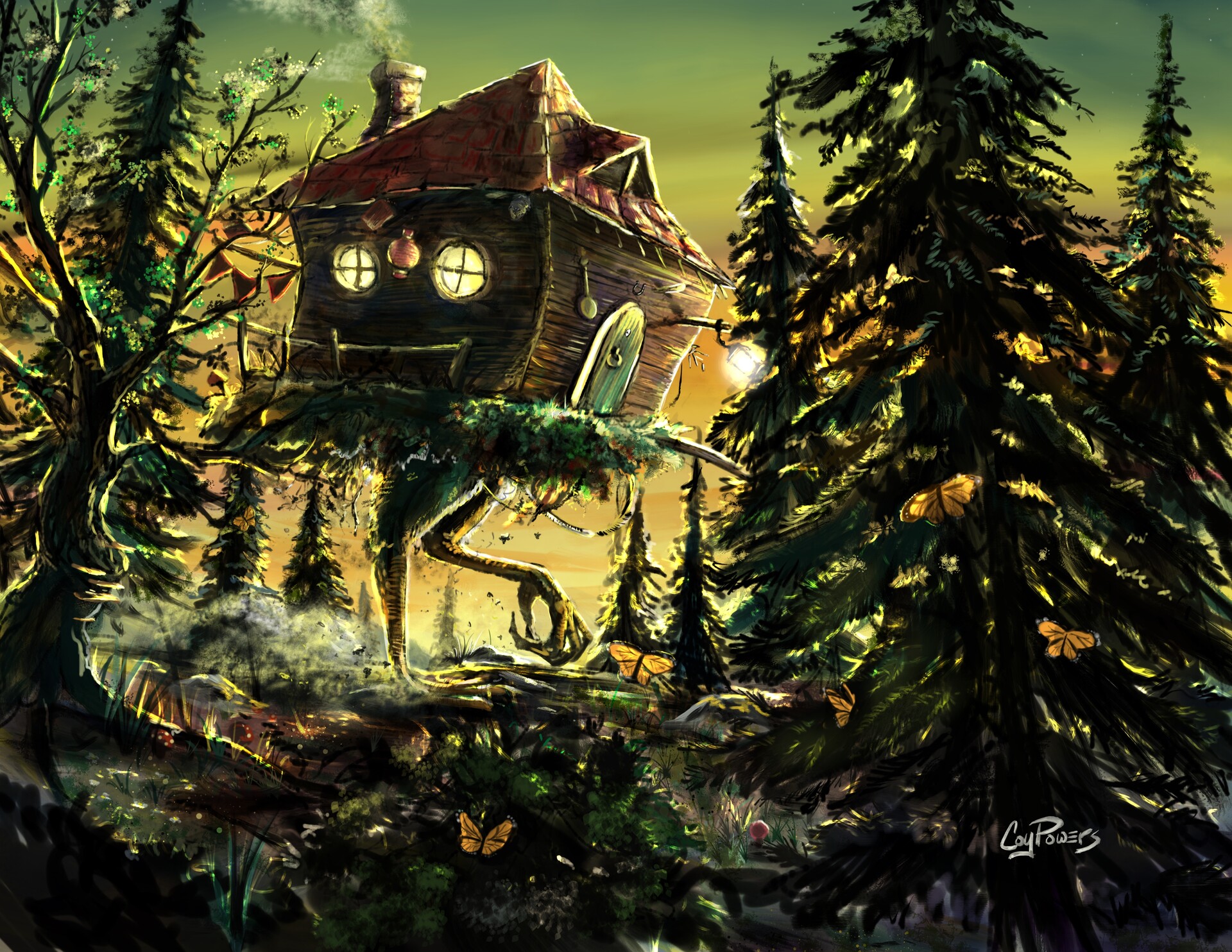
Baba Yaga’s house, which sits in the darkest corner of the woods, stands atop chicken legs. And the witch protects her hut with a fence built from human bones. I’m sure for each person there will be variation, but the tales say Baba is an old woman with iron teeth like boar tusks.
Illustration serves as the front cover of the book in the series Tales published around 1899. This grandmother, known as Baba Yaga, may remind some of another old woman who lives in a forest and eats children. Indeed, Baba Yaga’s story has echoes of Hansel and Gretel, with a Slavic twist. But some think that this character is even scarier than the villain from Grimms’ Fairy Tales.
She commands a flock of black geese who search the woods for children. Boys and girls who ignore their mothers’ warnings while wandering too far into the forest might find themselves snatched up by the geese and carried back to the witch’s oven. She is bony and frail, with a nose so long it hits the ceiling when she lies down to sleep. Some call her “the bony one.” Others claim her teeth are made from iron. Sometimes, she’s even portrayed as a trio of three evil sisters.
She has bear claws and wears a necklace of skulls, smokes a pipe, and sometimes has a golden or iron foot. This is an obvious nod to her shapeshifting, shamanic abilities similar to Berchta who manifests with a goose or swan foot. Some say she wears an apron and holds a key to life’s mysteries. Sometimes she holds a broom with which to sweep away any signs she’s been about.
In this section, we will delve into the enduring fascination with Baba Yaga and how she continues to inspire and intrigue people today. From encounters with lost travelers to lessons learned by curious individuals who dare to seek Baba Yaga’s wisdom, these narratives portray Baba Yaga as a complex and multi-faceted figure of myth and legend. This whimsical abode captivates the imagination, leaving many pondering about its origin and purpose. Shrouded in mystery, Baba Yaga’s house raises questions that intrigue both scholars and folklore enthusiasts. Baba Yaga holds a significant place in Slavic folklore, where she is believed to be the guardian of the water sources of life.
The hut is constantly spinning and will only stop with the chant, "Little house, little house. That large nose allows her to identify her visitors by scent, leading some folklores to argue that she's actually blind. Not all stories explicitly depict Baba Yaga as an ugly witch, but most Russians would. Oliver Lansley adapted and co-directed a theatrical version of The House with Chicken Legs, which was performed by Les Enfants Terribles.


No comments:
Post a Comment